Showing posts with label child language. Show all posts

3.18.2010

Types of bitches

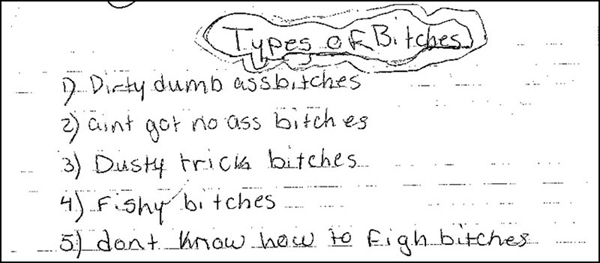
I was just directed to a hilarious post over at 'And I am Not Lying', called 'Types of Bitches', about a list written by third graders at an inner-city Washington DC school, detailing almost 100 types of bitches.

I'm blown away by the ingenuity of whoever wrote this. No way I could come up with that many types of bitches (or most things, for that matter) if I needed to. Clearly, these are kids who are absorbing a ton of language, and remembering it and recombining it at an impressive rate. I think we rarely see written examples of that.

But the real linguistic gem is the blogger's subsequent post, analyzing the comments people (presumably mostly adult, educated people) left on the original post. The blogger and some of the commenters he quotes really seem to get that a language prejudice issue arose out of this.
Stop being so judgemental. Damning her, her values, her upbringing, her likely future is ridiculous. She might be a “reflection of our future” but these are just a few sheets of paper not a manifesto or a clear indicator of a life rife with turmoil.
This is language practice -- a big part of what kids do with words is categorize, recombine -- test it out. It might tell us something about what the author hears a lot, but I don't think it tells us too much else about her. Certainly not that the "kid has issues", as one commenter put it. These are probably really powerful words in this kid's community -- words that let people exclude each other and seem better than each other, for example. What kid wouldn't want to play with that?

7.28.2007

junie b. good

a friend sent me this link to the new york times website recently. (i think it will require a sign-in, but should be free.) apparently a series of children's books is bringing the great grammar debate home to the parents of kindergarten-age kids.

junie b. is the name of the back-talking trouble-making main character of the series. junie narrates the book and her kindergarten and first-grade reading level make themselves seen in the text of the book. according to the article, the narration contains misspelled words, improper subject-verb agreement and incorrectly conjugated irregular past tense verbs.

many parents favor the spunky heroine and the books' humor, but just as many are incensed that they expose kids to potentially harmful improper grammar and bratty behavior. this forum on about.com is a treasure trove of popular opinions about usage and grammar. this is another incarnation of the prescriptivist/descriptivist debate that has raged in linguistics departments and usage textbooks for several decades. bluntly, prescriptivists believe that grammar rules exist for a reason and that deviations from what is currently known as standard english should be corrected. descriptivists acknowledge the room for variation in linguistic standards and try to describe 'deviations,' rather than eliminate them. real people, of course, hold all kinds of positions in between. what we'll call 'prescriptivist' parents believe that reading improper grammar will cause their kids to have lower reading scores and trouble with grammar themselves. 'descriptivists' believe that junie b.'s speech is normal for a young child and not harmful.

as with most things, i believe the right position is somewhere in the middle. a bit of digging into both the ny times article and the about.com forum reveal this position: the books are good because they entertain children and encourage them to read. all kids make errors while they're leaning; it's probably interesting for them to read about a character who makes the same mistakes. but prescriptivists are realists in one respect; one can't go through life in our society using improper spelling and grammar and be taken seriously in school or business. proper grammar is a mark of status and education just like personal hygiene or polite behavior. i would personally argue that kids should learn to recognize mistakes so that they can understand the social implications of making them and make informed decisions about whether or not they want to. the junie b. books could provide a great tool for parents to teach the meta-analysis that asks not just 'why did junie say that?' but 'why did junie say it that way?' Link

12.11.2006

science!

mike, a fellow student in my child language acquisition class, has posted an experiment (part of his final project) online... it strikes me as a fun task, and you can participate, even if you're not a child!

it's about the way we learn to recognize words in speech. i won't say too much else now, or risk biasing potential subjects, but perhaps after finals, i can recruit him to say a bit about his results.

enjoy!
test 1,
test 2,
test 3

ps - seems there's some paypal (as opposed to cash) money involved.